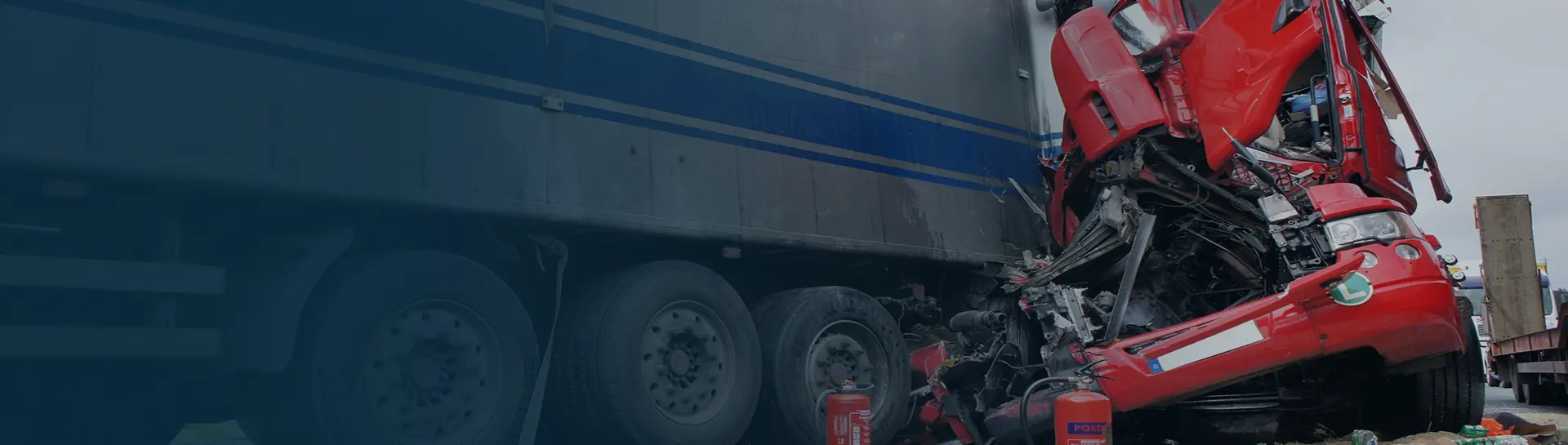
Where Truck Accidents Tend to Happen in Yakima
Commercial trucks travel throughout Yakima and surrounding areas every day. Some locations where truck accidents frequently occur include:
- Interstate 82: I-82 serves as a major transportation corridor through Central Washington and sees significant commercial truck traffic.
- State Route 24: This highway experiences regular freight movement and can become dangerous during adverse weather conditions.
- U.S. Route 12: Heavy commercial vehicle traffic along U.S. 12 contributes to a higher risk of serious truck-related collisions.
- State Route 97: As a major route connecting communities throughout the region, SR-97 often sees large trucks transporting agricultural and commercial goods.
- Industrial and Warehouse Areas: Truck accidents also occur near distribution centers, loading docks, warehouses, and commercial facilities where trucks frequently enter and exit roadways.
Common Types of Big Rig Accidents
Commercial trucks operate differently than standard passenger vehicles. Because of their articulated design and high center of gravity, they are susceptible to unique and devastating types of collisions. Understanding the nature of the crash is one of the first steps our legal team takes when building a comprehensive liability claim.
- Jackknife Accidents: A jackknife occurs when a truck’s drive wheels lock, causing the trailer to swing outward at a sharp angle toward the tractor. The driver completely loses control, and the swinging trailer can sweep across multiple lanes of traffic, crushing any vehicles in its path.
- Rollover Accidents: Due to their high center of gravity, semi-trucks are highly vulnerable to rolling over, especially when navigating sharp curves, experiencing sudden shifts in cargo, or traveling at excessive speeds. A rolling truck can obstruct an entire highway, causing massive multi-vehicle pileups.
- Underride Collisions: These are among the most lethal types of accidents. An underride occurs when a smaller passenger vehicle collides with the back or side of a semi-truck and slides underneath the trailer. The top portion of the passenger vehicle is often sheared off, leading to severe or fatal injuries for those inside.
- Squeeze Accidents: Commercial drivers must swing wide to the left to execute a sharp right turn. If a truck driver fails to check their blind spots, they can trap or "squeeze" a smaller car between the truck's trailer and the curb.
- T-Bone and Broadside Crashes: Frequently occurring at intersections, these happen when a truck runs a red light or fails to yield, smashing directly into the side of another vehicle.
Common Causes of 18-Wheeler Accidents
Determining the root cause of a commercial vehicle wreck requires a meticulous investigation. Truck accidents are rarely simple mishaps; they are almost always the direct result of negligence on the part of the truck driver, the trucking company, or third-party maintenance providers. Common causes include:
- Driver Fatigue: Despite strict regulations governing how long a driver can remain behind the wheel, demanding delivery deadlines lead many operators to drive while dangerously sleep-deprived. Fatigue impairs judgment, slows reaction times, and can cause a driver to fall asleep at the wheel.
- Speeding and Aggressive Driving: Trucking companies frequently utilize tight delivery windows. Drivers often speed to meet these schedules, failing to account for inclement weather, reduced visibility, or traffic congestion.
- Distracted Driving: Spending long, monotonous hours on the highway leads many drivers to look at cell phones, navigate GPS systems, eat, or use dispatch devices while moving, taking their eyes off the road during critical moments.
- Improperly Loaded or Secured Cargo: If cargo is loaded unevenly or is poorly secured, it can shift violently during a turn or sudden braking. This shift can destabilize the entire rig, causing a total loss of steering control or a spill of hazardous materials onto the highway.
- Inadequate Maintenance: Commercial trucks log tens of thousands of miles a month, placing extreme wear and tear on essential components. Failure to regularly inspect and replace worn brake pads, bald tires, steering linkages, and lighting systems regularly leads to catastrophic mechanical failures.
Why Truck Accidents Cause Severe Injuries
The sheer size and weight of commercial trucks mean that when a collision happens, the force of the impact can cause incredibly serious injuries to anyone in a smaller, lighter vehicle. Catastrophic injuries often require extensive, long-term treatment and create significant challenges for victims.
Common severe injuries from truck accidents include:
- Traumatic brain injuries (TBIs): Life-altering head injuries that can disrupt cognitive and physical functions.
- Spinal cord injuries: Severe damage that can result in partial or complete paralysis.
- Internal organ damage: Life-threatening injuries requiring emergency care and long recovery periods.
- Severe burns: Truck accidents involving hazardous materials or fires can cause serious burns and disfigurement.
- Crushing injuries: The massive weight of a truck may cause injuries requiring amputation or reconstructive surgery.
- Broken bones and fractures: Often complex and requiring multiple surgeries to heal properly.
Who May Be Liable for a Truck Accident?
Determining liability often requires a detailed investigation. Potentially responsible parties may include:
- The truck driver
- The trucking company
- A cargo loading company
- A maintenance provider
- A truck manufacturer
- A parts manufacturer
- Third-party contractors
Identifying all liable parties can significantly increase the compensation available to injured victims.
Federal Trucking Laws
Unlike standard car accidents, the commercial trucking industry is governed by a dense web of strict federal statutes. The Federal Motor Carrier Safety Administration (FMCSA) establishes these rules to protect the public from the inherent dangers of operating massive vehicles. When a truck driver or trucking company violates these laws, it serves as powerful evidence of negligence in your personal injury claim. Key FMCSA regulations include:
- Hours of Service (HOS) Regulations: These rules dictate exactly how long a driver can operate a commercial vehicle without a break. For instance, property-carrying drivers are generally limited to driving a maximum of 11 hours after 10 consecutive hours off-duty. They must also maintain precise electronic logging devices (ELDs) to record their driving hours.
- Strict Alcohol and Drug Limits: The legal blood alcohol concentration (BAC) limit for commercial truck drivers is 0.04% nationwide—half the legal limit for standard drivers. Additionally, carriers are required to conduct pre-employment, random, and post-accident drug screenings.
- Vehicle Maintenance Records: Trucking companies are legally obligated to keep detailed, systematic inspection, repair, and maintenance logs for every vehicle in their fleet. These files must be retained for at least one year.
- Commercial Driver’s License (CDL) Qualifications: Federal law mandates specific, rigorous training and medical examinations before an individual can secure and maintain a CDL. Trucking companies can be held liable for negligent hiring if they put an unqualified or unsafe driver on the road.
Compensation in a Truck Accident Claim
When you’ve been injured in a truck accident due to another party’s negligence, you have the right to seek compensation for your losses. Our Yakima truck accident lawyers can calculate how much compensation you are owed and then pursue it through settlement negotiations and possibly litigation if necessary.
Potential damages in a truck accident claim may include:
- Medical expenses: Covering past, current, and future medical treatments, surgeries, and rehabilitation.
- Lost wages: Reimbursement for time missed from work and compensation for reduced future earning capacity.
- Pain and suffering: Acknowledging the physical and emotional toll of the accident.
- Property damage: Paying for repairs or replacement of your vehicle and any personal belongings damaged in the crash.
- Punitive damages: Financial penalties for trucking companies or drivers who demonstrated especially reckless behavior; a rare type of damage that isn’t available in every case.
Frequently Asked Questions
How long do I have to file a truck accident claim in Washington?
In Washington, the statute of limitations for personal injury claims is generally three years from the date of the accident. If you do not file a formal lawsuit within this timeframe, you will permanently lose your right to seek compensation.
What if the truck driver was not cited by police?
A traffic citation is not required to pursue a truck accident claim. Liability may still be established through evidence gathered during the investigation.
Can I recover compensation if I was partially at fault?
Washington follows a comparative fault system. You may still recover damages even if you share some responsibility for the accident, although your compensation may be reduced accordingly.
How much is my truck accident case worth?
Every case is unique. Factors such as injury severity, medical costs, lost income, and long-term consequences all influence claim value.
Do truck accident cases usually settle?
Many truck accident claims settle through negotiations. However, if a fair settlement cannot be reached, filing a lawsuit and proceeding to trial may be necessary.
A Firm Built for the Toughest Cases
Truck accident victims face an uphill battle from the moment the crash happens. The trucking company's insurer begins building its defense immediately, often while injured victims are still in the hospital. Evidence gets documented, witnesses get interviewed, and the narrative begins to take shape — with or without your voice in it.
That's why contacting Carpenter & Zuckerman as early as possible matters. Our legal team moves quickly to preserve evidence, identify all liable parties, and build a case designed to pursue full and fair compensation. We've recovered millions for clients suffering traumatic brain injuries, spinal cord damage, and other life-altering harm. We know what these cases require, and we have the experience to deliver.
Want to know more? Contact Carpenter & Zuckerman now to learn how we can help you start a claim and demand a fair recovery.